If you only add one product to your skin care routine, make it sunscreen. Sun exposure is the biggest everyday cause of tanning, dark spots, uneven skin tone and early ageing, and no cream or serum can work well if the skin is unprotected from the sun. This guide explains how to read a sunscreen label, how much to use and how to wear it properly.
SPF (Sun Protection Factor) tells you how well a sunscreen protects against UVB rays, the rays that cause sunburn and tanning. SPF 30 blocks about 97 percent of UVB and SPF 50 blocks about 98 percent. The difference between them is small, so the real secret is using enough and reapplying on time, not chasing a higher number.
PA is the rating used in Asia for UVA protection. UVA rays go deeper into the skin and are linked with pigmentation and ageing. The more plus signs, the stronger the protection: PA+ is some, PA++ is moderate, PA+++ is high and PA++++ is very high. For daily use in India, look for SPF 30 or higher with at least PA+++ and the words broad spectrum on the label.
Most people apply far too little. A good guide for the face and neck is about a quarter teaspoon, or two finger lengths of lotion. Put it on as the last step of your morning routine, about 15 minutes before you go out, and do not forget the ears, the sides of the neck and the back of the hands.
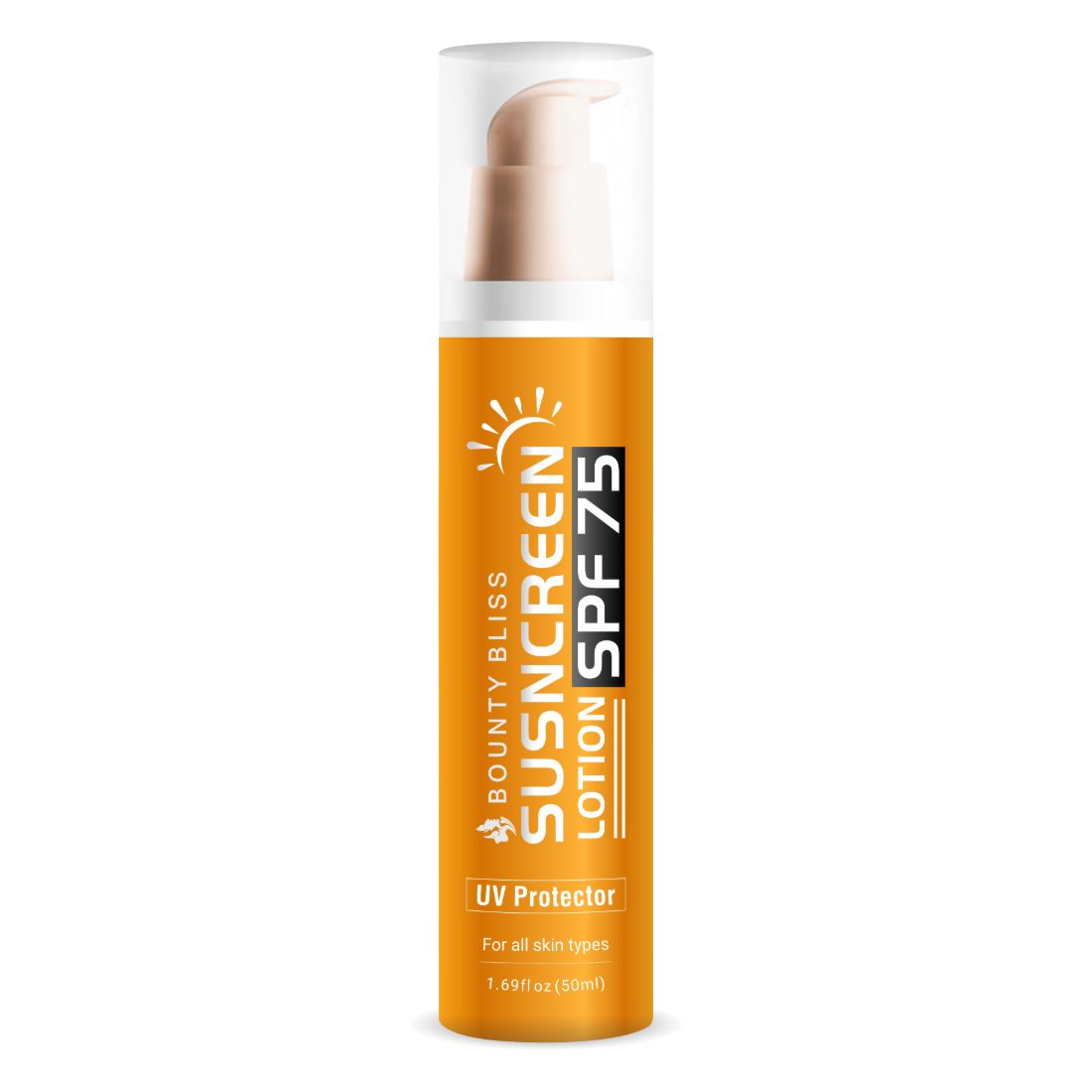
If you are looking for an everyday lotion, Bounty Bliss Sunscreen Lotion SPF-50 PA+++ Broad Spectrum Protection UVA/UVB/Blue Rays is listed with SPF 50, a PA+++ rating and broad spectrum protection. Please read the full details and ingredient list on the product page before you buy, and do a small patch test on the inside of your arm if you have sensitive skin.
You can explore more products for uneven tone in our pigmentation range. If your skin is very sensitive, breaks out easily or you have a skin condition, speak to a dermatologist before starting any new product.